
The Anatomy of Melancholy I
Robert Burton (Auteur)
Download : EUR 2,06
(Consultez la liste Meilleures ventes Psychiatry pour des informations officielles sur le classement actuel de ce produit.)


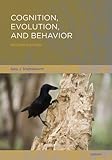
How do animals perceive the world, learn, remember, search for food or mates, and find their way around? Do any non-human animals count, imitate one another, use a language, or think as we do? What use is cognition in nature and how might it have evolved? Historically, research on such questions has been fragmented between psychology, where the emphasis has been on theoretical models and lab experiments, and biology, where studies focus on evolution and the adaptive use of perception, learning, and decision-making in the field. Cognition, Evolution and the Study of Behavior integrates research from psychology, behavioral ecology, and ethology in a wide-ranging synthesis of theory and research about animal cognition in the broadest sense, from species-specific adaptations in fish to cognitive mapping in rats and honeybees to theories of mind for chimpanzees. As a major contribution to the emerging discipline of comparative cognition, the book is an invaluable resource for all students and researchers in psychology, zoology, behavioral neuroscience. It will also interest general readers curious about the details of how and why animals--including humans--process, retain, and use information as they do.

In the seventeenth century, the philosopher Spinoza examined the role emotion played in human survival and culture. Yet hundreds of years and many significant scientific advances later, the neurobiological roots of joy and sorrow remain a mystery. Today, we spend countless resources doctoring our feelings with alcohol, prescription drugs, health clubs, therapy, vacation retreats, and other sorts of consumption; still, the inner workings of our minds-what feelings are, how they work, and what they mean-are largely an unexplored frontier.
With scientific expertise and literary facility, bestselling author and world famous neuroscientist Antonio Damasio concludes his groundbreaking trilogy in Looking for Spinoza, exploring the cerebral processes that keep us alive and make life worth living.


When the first English-language edition of The Fundamentals of Psychoanalytic Technique was published in 1991, it was recognised as a classic of its field to rank with the accounts of Glover, Fenichel, and Greenson. For this edition, R. Horacio Etchegoyen has added new material on insight, early development, and the contribution of Margaret Little, among other topics. The book has also been completely redesigned and re-typeset for ease of use. The structure of the first edition has been retained, with topics such as Analysability, the Psychoanalytic Interview, Transference and Countertransference, Interpretation and Termination treated in sequence. Within each subject, Etchegoyen presents the theories and observations of each major contributor to the discussion of these topics, from Freud to the present day, and in the process reveals the particular advantages and disadvantages which fall to the various theoretical positions and orientations adopted. As a resource both theoretical and practical for analysts new and old, The Fundamentals of Psychoanalytic Technique stands alone in the contemporary analytic literature. As Patrick Casement wrote, reviewing the first edition for the International Journal of Psycho-Analysis, "There is no other book like it."
